
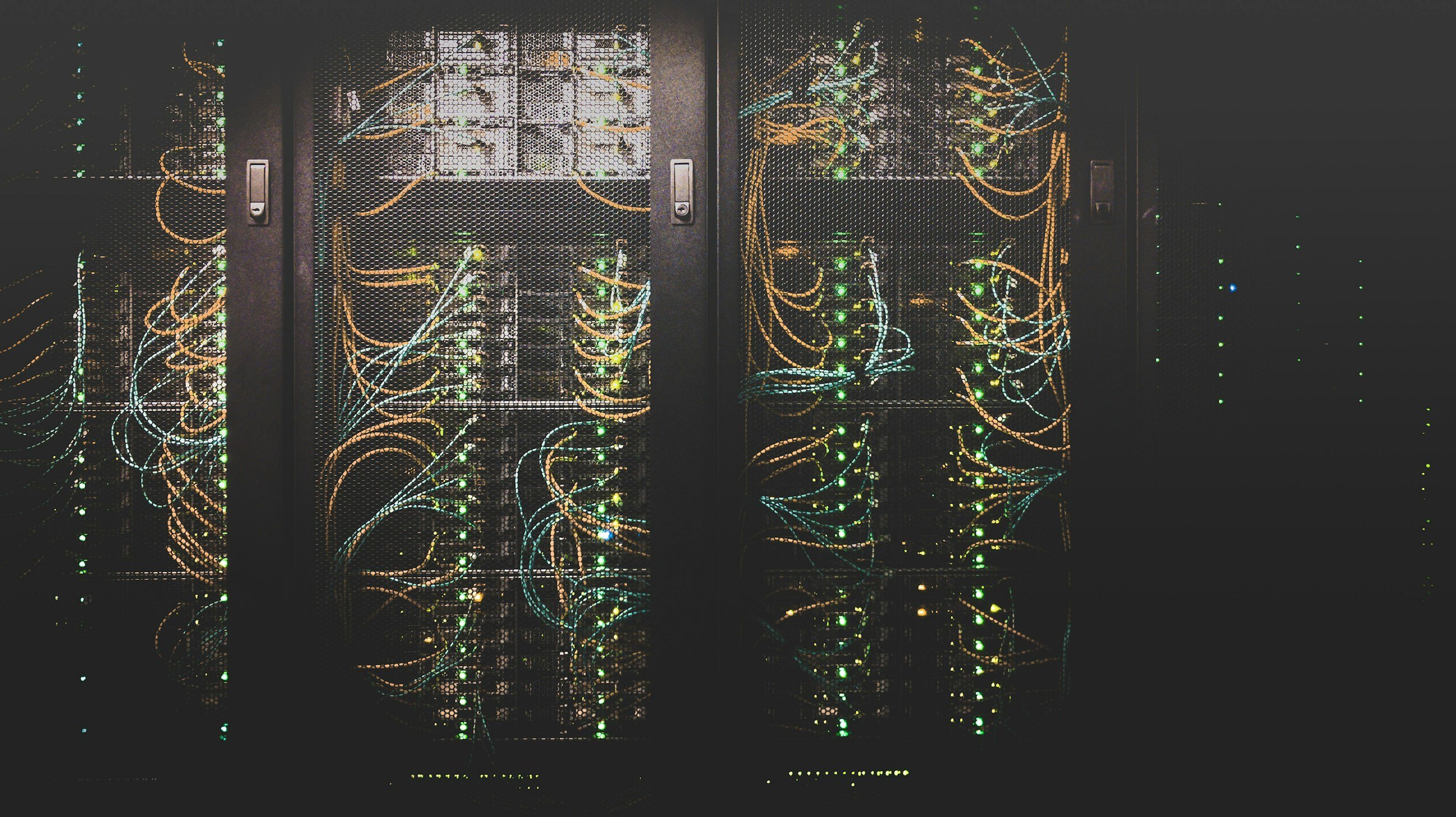
Short answer: Third-party maintenance (TPM) is hardware repair and replacement for servers, storage and network gear, delivered by a company that isn't the manufacturer. You keep the equipment you own. The provider brings the parts and the engineers, and you pick the service level. Coverage can start before or after the warranty ends, including after the OEM stops supporting the model. What it doesn't do is hand you new firmware releases or software entitlements. Those stay with the manufacturer.
That last sentence is where most of the confusion lives, so this guide spends as much time on the limits as on the coverage.
First, which "TPM" are we talking about?
Search for "TPM companies" and you'll get chip makers and facilities firms mixed in with hardware support providers. The acronym is shared. Here's the split.
| Acronym | What it means | Who it's for |
|---|---|---|
| TPM (IT hardware) | Third-party maintenance: independent repair and replacement for data center hardware | IT and infrastructure teams with servers, storage and network gear |
| TPM (security chip) | Trusted Platform Module: a crypto chip on the motherboard that stores keys | Security teams, anyone dealing with BitLocker or Windows 11 requirements |
| TPM (manufacturing) | Total Productive Maintenance: a plant-floor maintenance method | Manufacturing and operations |
| "Third-party maintenance" (facilities) | Building upkeep by an outside contractor | Facilities managers |
This article is about the first row. If you came here for the chip, you want your server or PC vendor's documentation instead.
What third-party maintenance actually is
When a disk, power supply or controller fails, somebody has to figure out what broke and show up with the right part. The manufacturer will do that work under warranty and then under a renewal contract. A TPM provider does the same repair on the same hardware, under a contract you negotiate with them instead.
Coverage can start at different points in a system's life:
- During the warranty. Some teams add a faster onsite response on the same serial while the OEM warranty is still running (a warranty uplift), or keep the OEM on part of the room and put the rest with a TPM provider.
- After the warranty. The factory contract ended, the box is still in production, and the renewal quote came in higher than anyone expected.
- After end of life or end of service life (EOL/EOSL). The OEM no longer sells support for the model at all. This is often where third-party maintenance is the only contract left. Our EOSL library lists models by brand, such as Dell PowerEdge and HPE ProLiant.
- In a gap. OEM support lapsed and the refresh is years out. Gap coverage keeps the room on a contract instead of time and materials.
It isn't a break/fix shop. Break/fix is a ticket with no contract behind it. TPM is a contract with named service levels, parts staged ahead of time and an engineer who already knows the room.
What TPM covers
The core is hardware. Here's how the scope usually breaks down on a NETRAID contract.
| Area | Covered? | Notes |
|---|---|---|
| Diagnosis and troubleshooting of hardware faults | Yes | Phone support and remote troubleshooting, plus onsite support |
| Replacement parts | Yes | Certified parts, staged in the region or on site |
| Onsite engineers | Yes | Local engineers, typically within 20 miles of the site |
| Servers, storage, network, GPU, HCI and tape | Yes | Mixed brands on one contract, see data center maintenance |
| Post-warranty, EOL and EOSL hardware | Yes | Quoted from the serial, including models the OEM won't quote |
| Service level per system | Yes | From 24x7x2 onsite down to 9x5 parts only |
| Onsite spares, asset tracking, defective media retention | Optional | Add-ons on the same contract |
| Firmware updates | Depends | Scoped on the quote; only where you still hold the entitlement |
| Operating system support | Separate line | OS support is quoted on its own |
| Managed IT, cybersecurity, backup | Separate service | Available, never required |
| CRAC, UPS, generators | No | Facilities equipment is out of scope unless quoted separately |
Two rows in that table cause most of the arguments, so let's take them one at a time.
What TPM doesn't cover
Firmware releases and software entitlements
New firmware releases stay with the manufacturer. A TPM provider can't create an entitlement the OEM didn't sell you, and it can't bring back one that already expired. If you still hold a firmware license, NETRAID can apply updates where the quote says so.
In practice this matters less than people fear. On many post-warranty and EOSL systems the firmware is already mature, and the last release has been out for a while. Before you decide, check which entitlements your team has actually used in the last year or two. If the honest answer is "we applied one release in 2023," that tells you a lot.
Where it does matter: a system that must stay on current vendor patches for compliance. Keep that one on OEM support or plan its refresh. Don't let anyone talk you out of that.
Operating system patches
Hardware maintenance doesn't extend an OS vendor's lifecycle. A good example is coming up soon: Microsoft's Windows Server 2016 lifecycle page (opens in a new tab) shows extended support ending in January 2027 (January 12 is the last calendar day; Microsoft records the cutoff as 6:59 a.m. Pacific on January 13). After that, security updates come only through Microsoft's paid Extended Security Updates.
A TPM contract keeps the server hardware running. It doesn't produce Microsoft patches. Our Windows Server OS support can help with the OS itself, but new patches and license keys stay with Microsoft, and ESUs are a separate Microsoft purchase.
Facilities
CRAC units, UPS systems and generators are building infrastructure. They're out of scope unless quoted separately. If your RFP lumps "data center maintenance" together with HVAC, split it before it goes out.
Running your environment
A hardware maintenance contract doesn't make the provider your sysadmin. Configuration, monitoring, user management and day-to-day operations stay with your team unless you buy managed IT as its own service.
TPM vs OEM support vs break/fix
A qualitative side-by-side. Cost is covered separately below because the only honest number is your own quote.
| OEM support renewal | Third-party maintenance (NETRAID) | Break/fix (time and materials) | |
|---|---|---|---|
| Contract | One per manufacturer | One contract for every brand in the rack | None |
| EOL / EOSL hardware | Often unavailable or limited | Covered | Best effort |
| Who shows up | Engineer dispatched by the OEM | Local engineer, typically within 20 miles | Whoever is available |
| Parts | OEM logistics | Certified parts staged in the region or on site | Sourced after the failure |
| Response | Per the OEM's tier | 30-minute first response on production; onsite level set per system | No commitment |
| Firmware releases | Included with the entitlement | Stay with the OEM | Stay with the OEM |
| Quoting | Per vendor, often over weeks | Same business day from an asset list | Per incident |
| Refresh timing | Renewal priced around the next product | You decide | You decide, and absorb the risk |
For a deeper cost view, see OEM vs third-party maintenance.
When TPM makes sense, and when to keep the OEM
TPM tends to fit when:
- The warranty is ending and the renewal is priced like the hardware is new.
- A model is EOSL and the OEM will only quote a refresh.
- The room has several manufacturers and several support contracts, each with its own renewal date.
- The hardware still does the job and the application is certified to that generation.
Keep the OEM on a system when it's inside its first warranty and you're happy with it, when you depend on new firmware or vendor software support for that platform, or when policy requires OEM support.
Many teams end up hybrid: OEM support on the newest gear, third-party maintenance on post-warranty and EOSL systems. That's a perfectly normal setup, and one contract can sit right next to the other.
What does third-party maintenance cost?
It depends on the hardware, the service level and the site, so we won't make up a figure. What we can say is what our site says: NETRAID hardware quotes typically land around 70% below a manufacturer renewal. Manufacturer renewals are priced around the next product cycle. A TPM quote prices the parts, the local engineers and the response time you actually use.
A rough way to size it before you call anyone:
| Step | Your number |
|---|---|
| Current OEM renewal for the systems in question | $________ |
| Rough third-party ballpark at the typical 70% below (renewal x 0.30) | $________ |
| Systems that could drop to next-business-day or parts only | ________ |
| Real quote from an asset list, same service levels | $________ |
The last row is the only one that counts. The ballpark tells you whether it's worth an afternoon. Compare quotes at the same service level, system by system, or the comparison means nothing.
Questions to ask any provider
You can hold any provider to these, including us:
- Where is the nearest engineer to each of my sites, and where are the parts?
- Can I set the service level per system, and change it when a workload moves?
- What exactly is your firmware policy, in writing, on the quote?
- What happens when something off contract breaks?
- How do I open a ticket and see what's covered today?
If you're already with another provider and thinking about moving, our switching guide covers notice periods and timing.
How coverage starts with NETRAID
- Send the asset list. Serials, a spreadsheet export or a photo of the rack. We map every brand, including hardware the manufacturer won't quote anymore.
- Review the quote. One price with mixed service levels, usually the same business day.
- Coverage starts. One contract, one team, 24x7x365. You get a named manager instead of a call queue.
Customers open tickets and check coverage, warranty dates and invoices in the Client Portal (sign in here (opens in a new tab)). You can import the rest of the floor at no charge and watch OEM warranty dates before you add coverage.
We've done independent hardware maintenance since 2004. Customer retention is 100%, and our engineers are factory-trained. We're based in Michigan with local engineers across the US and beyond.